
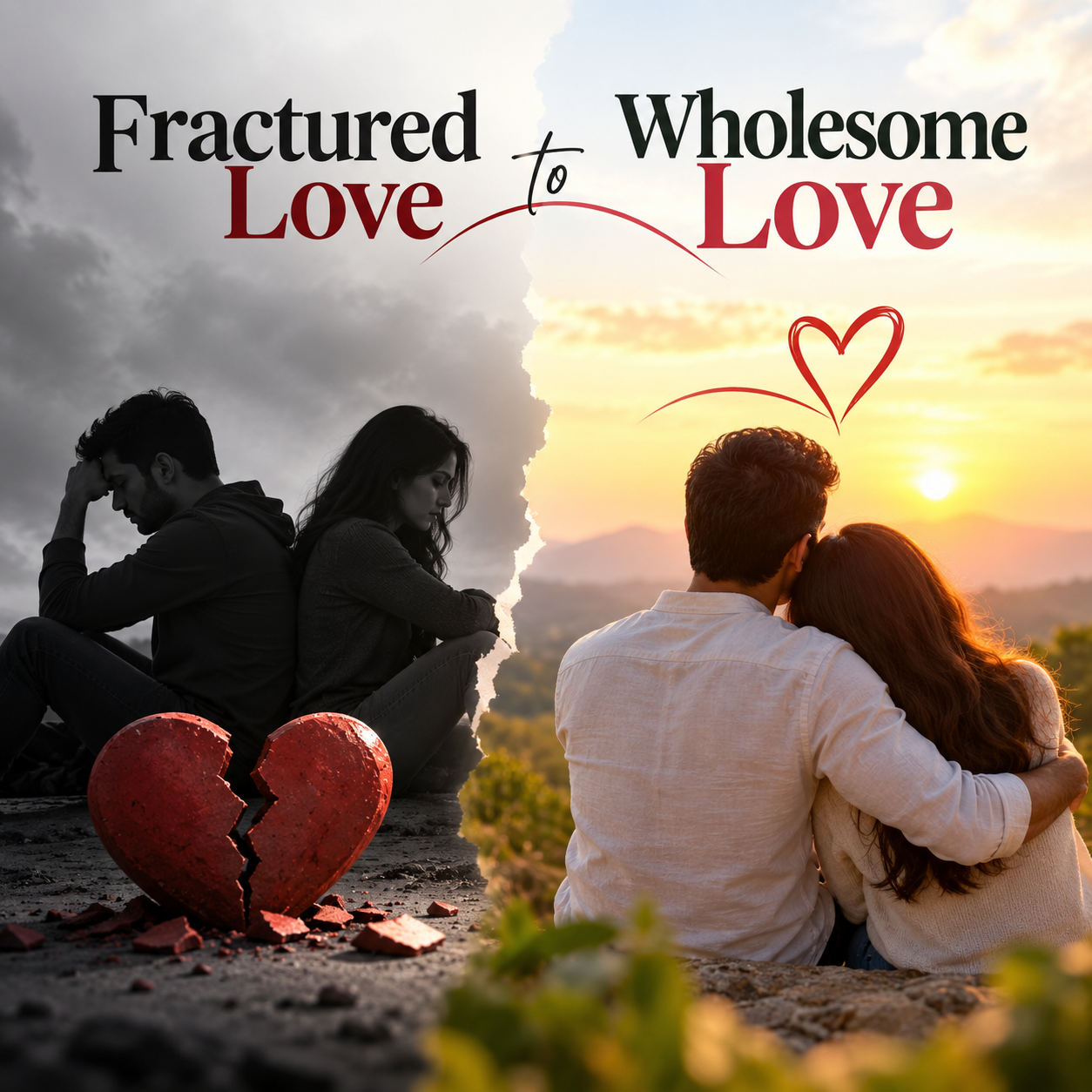
She Loved Him Even When He Hurt Her How She Finally Found The Strength To Walk Away

An anonymized client story about toxic attachment, red flags, boundaries and finding yourself again.
“I loved him even when he spat on me, kicked me out at 2 a.m,and once told me he could make my body disappear.”
When My Client First Shared This With Me
When my client first shared this with me, I could hear the conflict in her voice.
She wasn't simply trying to leave a relationship.
She was trying to leave a relationship she had spent years hoping would finally become the relationship she had imagined.
And that distinction matters.
Because sometimes, we don't stay because we don't see the red flags. We stay because we see them and keep hoping that love will somehow make them disappear.
It Started With Feeling Chosen
She was a young adult, newly out of another toxic relationship. He came from a faraway land. He was charismatic, attractive and appeared mature and confident. Most importantly, he seemed to want the same thing she desperately wanted.
A home. A family. Someone who would choose her.
He praised her achievements. He made her feel admired. He talked about his family meeting her. For someone who had been yearning for belonging, it felt like finally coming home. But there were signs. Signs she didn't recognize or perhaps wasn't emotionally ready to act upon.
The Red Flags Appeared Early
Two days after telling her that he liked her, he called her. She missed the call. His response wasn't concern. He left her a message filled with cruel names. Instead of walking away, she called him back to explain herself. Then came another warning. He told her he couldn't wait for his family to meet her.
She heard: “Finally, I have a family.”
But later, when he became angry, he told her he could never be with a woman who was divorced. Instead of questioning why she was being treated this way, she tried harder. She wanted to prove that she could be a good enough partner. Then there was the way he spoke about his former wife He constantly described how she had abandoned him and frequently referred to women using degrading language. Again, there was a choice. Walk away.
Or stay and prove: “I won't abandon you like she did.”
She stayed. And slowly, she began confusing endurance with love.
The Cycle Became Her Normal
By the time he spat on her, kicked her out in the middle of the night and threatened her, something important had already happened.
He knew she wasn't going anywhere.
She had spent years demonstrating that she would stay through almost anything. For nearly four years, she chased him, begged him to choose her and held on to the good moments. And there were good moments. That is one of the most confusing parts of a toxic relationship. The person isn't necessarily cruel every minute of every day. Sometimes they are incredibly loving. Sometimes they are funny. Sometimes they are affectionate. Sometimes they become the person you originally fell in love with. And those moments can keep you waiting for the next good phase. Eventually, he married her. But marriage didn't change the underlying relationship.
A Marriage Certificate Couldn't Heal What Was Broken
She eventually realized something profound:
Marriage doesn't automatically change someone's behaviour. A certificate doesn't erase abusive patterns. It doesn't heal childhood wounds. It doesn't transform attachment patterns. It doesn't create emotional safety where trust has already been destroyed. And it certainly doesn't make a person feel secure simply because they have been chosen legally. She realized that she couldn't keep waiting for the man she first met to permanently return. She also realized something painful. She couldn't rescue him. And she couldn't keep sacrificing herself while hoping that he would eventually become different.
The Hardest Part Wasn't Leaving
It was staying gone. She had tried leaving before. But he knew exactly how to bring her back. A softer voice. Sad eyes. A smile. A little affection. A familiar tone. And suddenly the woman who had decided she was finished would start wondering: “Maybe this time will be different.”
This is where our work became important. Because she didn't need another lecture telling her to “just leave.” She already knew she needed to leave. What she needed was to understand why she kept returning and how to protect herself when her emotions became vulnerable again. We Created Something Very Simple: Her Reality List.
I encouraged her to write down everything she remembered. The cruel words. The insults. The threats. The disgust on his face when he was angry. The nights she lay awake crying while he slept peacefully. The moments when she felt frightened, humiliated or completely alone. Not to keep her trapped in the past. But to help her remember the whole reality of the relationship. Because when he was kind, her mind naturally wanted to focus on the kind version of him. The charming version. The loving version. The man she had hoped he could become. So she carried the list with her. And whenever he became sweet again, she read it. She reminded herself: “This is not the whole relationship. This is one part of the relationship and that part has hurt me deeply.”
The list became an anchor. It helped her distinguish between a temporary change in behaviour and genuine, sustained change.
Then She Made a Boundary
She had a planned trip to visit her father. She told him she would go and she would not return afterwards. This time, she didn't make the boundary as a threat. She made it as a decision. And something changed. He became kind. He stopped fighting. He even told her he would buy her a ticket to return after her visit. He suddenly became the man she had wanted him to be. But she had learned something important:
A boundary isn't a boundary if we abandon it the moment the other person becomes nice.
• She left.
• She was scared.
• She was sad.
• She wasn’t completely confident that she could stay away.
• But she landed safely and blocked him everywhere.
For the first time, she chose her own safety over the hope that he would change.
What She Learned About Red Flags
Years later, she could see the relationship with much greater clarity.
These were some of the red flags she learned to take seriously:
1. Cruelty Disguised as Anger
Being angry doesn't give someone permission to humiliate, threaten or degrade you.
2. Early Verbal Abuse
The first insulting message wasn't an isolated incident. It was information.
3. Contempt Toward Women
How someone consistently speaks about their ex-partner—and about women generally—can tell you something important about their attitudes toward relationships.
4. The Need to Prove Your Worth
If you constantly feel that you must prove you're good enough to be loved, something is already wrong.
5. The Push-Pull Cycle
Cruelty followed by affection can create an incredibly confusing emotional bond.
6. Promises Without Sustained Behavioural Change
Words can be comforting. Consistent behaviour is what builds trust.
7. Ignoring Your Own Fear
If you're repeatedly frightened, walking on eggshells or questioning your own reality, don't dismiss that feeling.
And Perhaps the Biggest Lesson of All
• She realized that she had not stayed because she was weak.
• She stayed because she was carrying a deep longing to belong.
• She wanted to be chosen.
• She wanted a family.
• She wanted the relationship she believed was possible.
• And sometimes, when we desperately want something, we become willing to negotiate with ourselves to keep it.
• That doesn't make us foolish.
• It makes us human.
• But healing requires something different.
It requires learning to choose yourself even when another person doesn't choose you in the way you need.
Twenty Years Later, She Sees the Story Differently
With distance and healing, my client also developed compassion for the younger version of herself. She could see that they were two young people without the emotional tools, guidance or relationship skills they needed. She recognized that she too had sometimes responded poorly when her needs weren't met. That insight didn't excuse his abuse.
Understanding is not the same as justifying.
Taking responsibility for your own behaviour does not mean taking responsibility for someone else's abuse.
Both things can be true:
She had things to heal within herself. And she never deserved to be threatened, humiliated or physically abused.
What I Want Other Women to Know
If you're reading this and recognizing yourself, please don't wait for a relationship to become “bad enough” before you take your own discomfort seriously. You don't need a dramatic final incident to justify leaving. You don't need everyone else to agree with your decision.
And you don't need to prove that the other person is a monster. Sometimes the most important question isn't: “Is he a good person or a bad person?”
It's: “Is this relationship safe, respectful and healthy for me?” And if the answer is no, you are allowed to take that answer seriously Healing isn't simply about leaving someone. It's about finding the part of yourself that became lost while trying so hard to be loved. It's learning to trust your instincts again. It's learning that boundaries aren't punishments. It's learning that love doesn't require you to tolerate humiliation. And perhaps most importantly it's learning that being chosen by someone else can never be more important than choosing yourself.
This story has been anonymized and adapted to protect client privacy. Details have been changed while preserving the therapeutic themes and lessons.
— Shivanya Yogmayaa
Relationship & Intimacy Coach
Latest Posts



















contact with us